
Finding Salem Resident Records
No single master roll holds every answer. A Salem residents directory is really a set of narrow records. Each one answers a different question. A current Marion County address points to the Assessor and GIS. A recorded transfer points to the Marion County Clerk. An old household points to directories, maps, newspapers, and archival finding aids. Court, voter, credential, and business systems serve their own purposes within their own limits. Keeping these record types distinct makes a Salem search more accurate. It also stops a partial result from being mistaken for a full personal history.
Confirm the address and county first. Salem extends across the Willamette River into Polk County. So a Salem postal address is not automatically a Marion County parcel. Keep directional suffixes such as NE and SE exactly as printed. Then hold onto the account number, legal description, publication year, or case number the source provides. Those identifiers make any later request far more useful than a broad name-only request.
- Use the City limits locator to establish the municipal point and the responsible county.
- For a Marion County parcel, consult the Assessor record and note the account or tax-lot reference.
- Use GIS only to compare parcel context, streets, and available layers, then carry the legal description to the Clerk.
- For a past household, compare a dated directory, map, or newspaper with the deed and parcel trail.
- When a needed item is not online, request the exact record, date span, and identifier from its custodian.
Salem Resident Records Offices
Salem serves as both the Marion County seat and Oregon's capital. County and State research offices therefore sit close together. Yet they do not hold the same records. The Clerk keeps recording and archive routes. The Assessor maintains the county property layer. Marion County Elections administers local registration questions. Oregon's voter tool is a separate state interface. The State Archives supplies historical series and older vital-record pathways. Start with the office that owns the record. Do not ask one office to assemble material held elsewhere.
Marion County Clerk
Licensing and Recording
555 Court Street NE, Suite 2130
503-588-5225
Marion County Assessor
Property and assessment layer
Marion County addresses only
Use the current county contact route
Marion County Elections
555 Court Street NE, Suite 2130
Salem, OR 97301
503-588-5041
Salem's Two County Boundary
Salem sits across a county line, and that shapes how its records work. The City limits locator tells whether a spot is inside Salem. Parcel questions belong to the county Assessor, and recording questions to the county Clerk. Postal routing belongs to USPS. No single answer covers all of them. West Salem shows why. An address can sit inside the City yet fall under Polk County rather than Marion County.
The split matters just as much for older records. A city permit, a county deed, a ZIP code directory label, and a Census geography can all overlap. They can point to different jurisdictions while doing so. Before jumping from one records office to another, note the street suffix. Also note any unit details and where the record came from. That habit keeps a Salem deed or parcel from landing in the wrong county file.
Note: City boundaries, county jurisdiction, and postal delivery areas answer different questions. Confirm each through its responsible agency.
Salem Parcel Record Limits
The Marion County Assessor Property Search is the official starting point. It serves a Marion County address. The County describes its public property information as property description, ownership, tax-lot, district, mailing, location-address, and assessment detail. It states that online data refreshes every 24 hours. Those fields anchor a parcel well. An owner or mailing entry, though, is not proof of current occupancy. It does not show that a person lives at the address.
| Assessor field family | Use in Salem research |
|---|---|
| Ownership and mailing | Property-record attributes that require a date and source context. |
| Location address | Connects the account to the address form used by the County. |
| Tax lot and district | Useful identifiers for GIS and legal-description research. |
| Assessment detail | Assessment information, not a current household listing. |
The assessor portal is dynamic, so rely on the visible controls it presents and preserve the account reference it returns. The County's assessment-search entry displays the official access route for Salem property research.
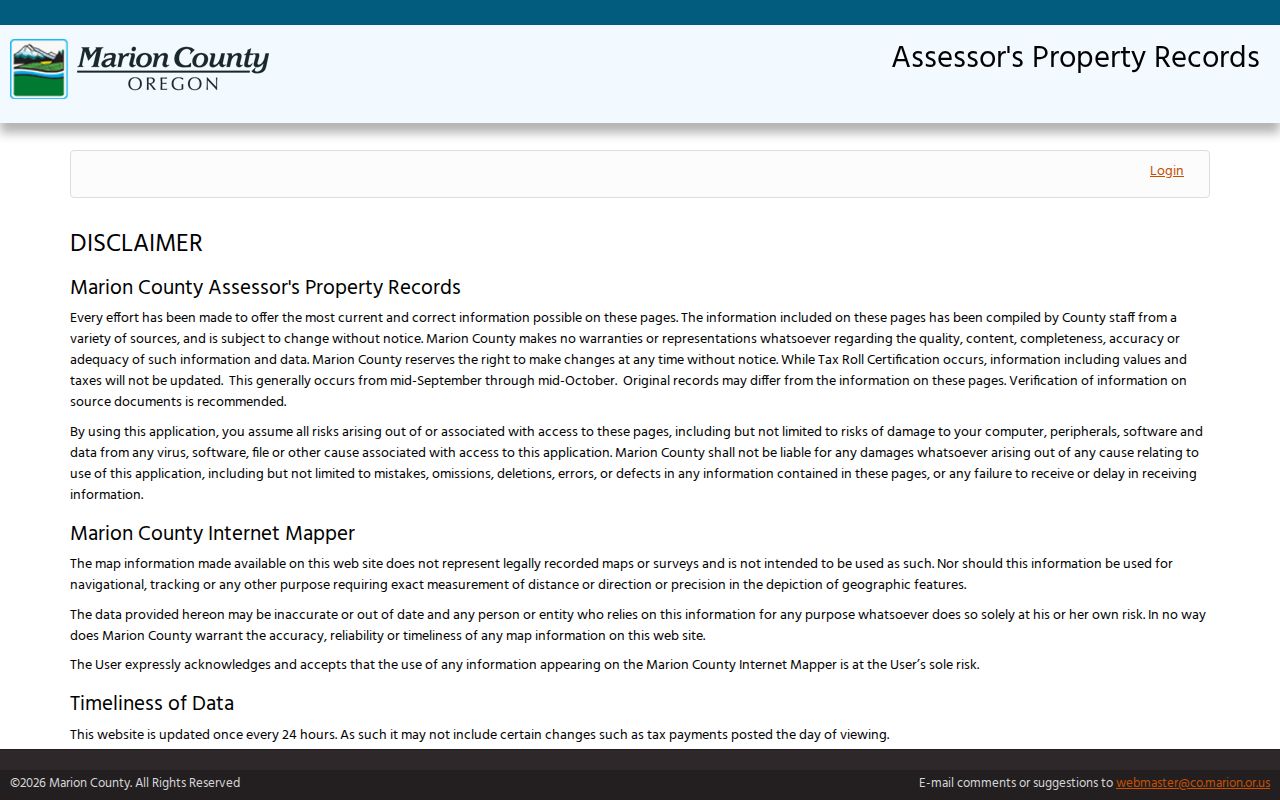
A portal's availability and acceptance steps can change at any time.
Oregon Voter Records Near Salem
Election records serve several separate uses. The state voter-search entry requires a verification step before any individual lookup. Its fields should not be guessed or bypassed. Marion County Elections provides the local administration route. Oregon Revised Statutes section 247.948 identifies categories of registration information that can be public. It excludes signatures, Social Security numbers, driver-license data, birth month and day, and other protected information. Ballot choice remains secret.
The State also publishes a voter-list request route. Marion County, meanwhile, makes aggregate registration reports available for 2012 through 2026. Those reports describe registration patterns by status, district, precinct, and household-level categories. They do not replace an official, permitted individual request. They also do not authorize a reader to infer political preference from a record.
The Oregon voter-search entry shows the verification barrier that applies before an individual lookup.
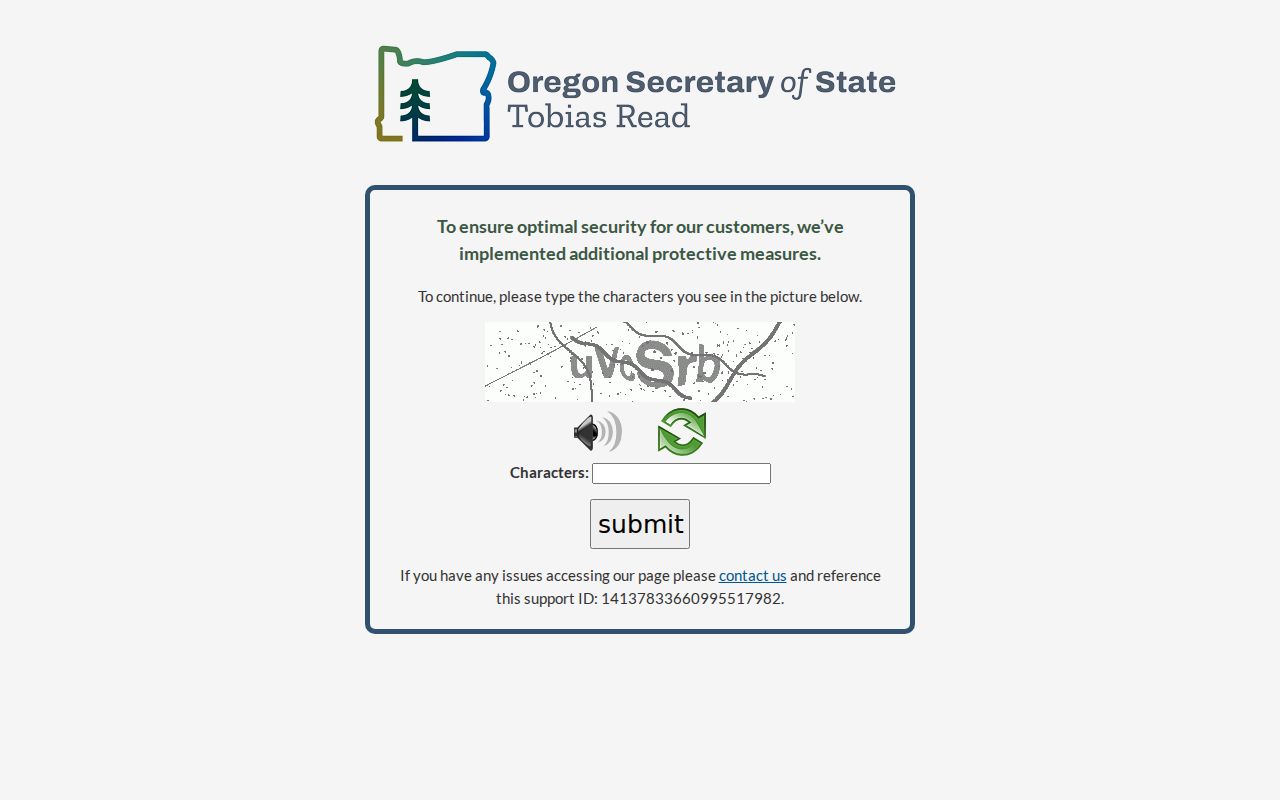
Use the official process for a permitted purpose, and leave protected information unavailable. The State's voter-list request page is a separate route for data allowed by law.
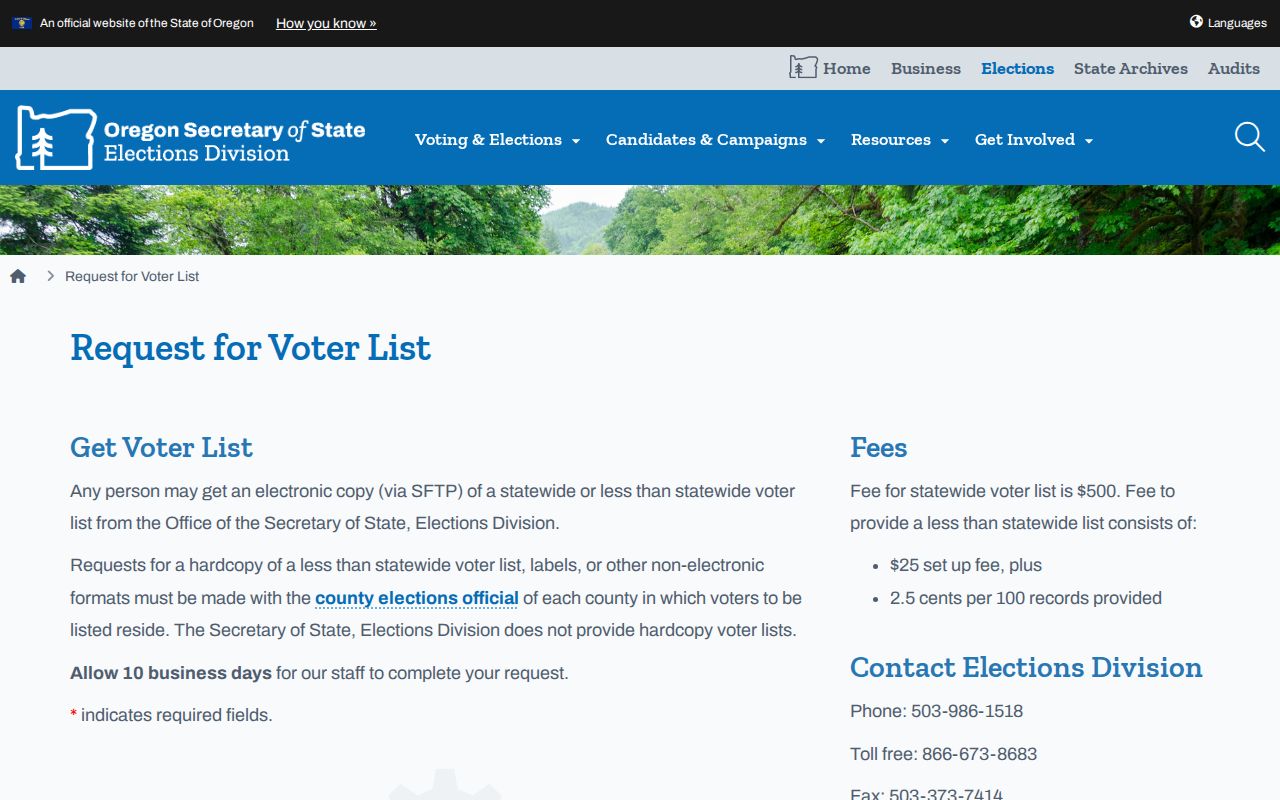
Fees, access rules, and agreements shift over time, so treat the current state form as the final word.
Current Salem Resident Directories
Match each Salem source to the job at hand. A property account describes a parcel and its property-record fields. A recorded-document index names the parties to a recording. Election resources answer to election law. Business and credential tools confirm an entity or license, not a resident profile. None of them amounts to a full population list. Before linking records to one person, compare the exact address, the source date, and the stated scope of the agency that keeps them.
| Salem source | What it can establish | Custodian | Access path |
|---|---|---|---|
| Property account | Parcel, ownership, mailing, location, tax-lot, and assessment fields | Marion County Assessor | Current property portal |
| Recorded documents | Parties and document history connected to a legal description | Marion County Clerk | Digital route, historic route, or office |
| Registration data | Only categories permitted by Oregon law | Oregon Elections / County Elections | Official lookup or request process |
| Professional credential | Regulatory status and credential information | Oregon licensing board | Agency verification system |
| Neighborhood finder | Civic association geography, notices, and meetings | City of Salem | Address-based map finder |
A narrow question makes any Salem records result more useful. For a parcel trail, take the address-focused Street Directory route rather than substituting it for the proper custodian's own record.
Salem Civic Map Context
Salem's address-based neighborhood-association finder layers civic geography onto an address without building any resident list. The City has recognized neighborhood associations since 1972. It currently identifies 17 of them. A map result can point toward an association's notices, agendas, minutes, meetings, and planning context. It proves no title, no membership, and no personal tie to a property.
That local layer sits well beside a Salem Permit Application Center record. A PAC planning file may carry neighborhood context or attachments. The finder identifies the City-recognized area where meeting material appears. Neither source tells you a building's condition or who lives there. Any parcel question ultimately returns to the Assessor, GIS, and Clerk sequence.
Note: A neighborhood association describes civic geography around a Salem address. It is not a household roster or a property-interest record.
Salem Court Access Options
Court research starts with the court, never with a name. The Oregon Judicial Department splits access into basic online records and calendars, courthouse public terminals, and the paid Oregon Judicial Case Information Network. The basic lane does not reach every matter. Adoption, juvenile, mental-health, and other protected categories can be excluded. An empty result never settles whether a record exists. And a result line is not the complete file or a final disposition.
Marion County Circuit Court keeps six public terminals in its records lobby and describes digital or physical court records from 1987 forward, limited microfilm covering 1910 through 1986, and limited audio beginning in 2001. Its request form asks for contact information, the case or party, an approximate filing date, the case number if known, and the document sought. A focused request respects staff time. It also produces a better search than a broad personal-history sweep.
The Oregon Judicial Department guide explains the available public search lanes.
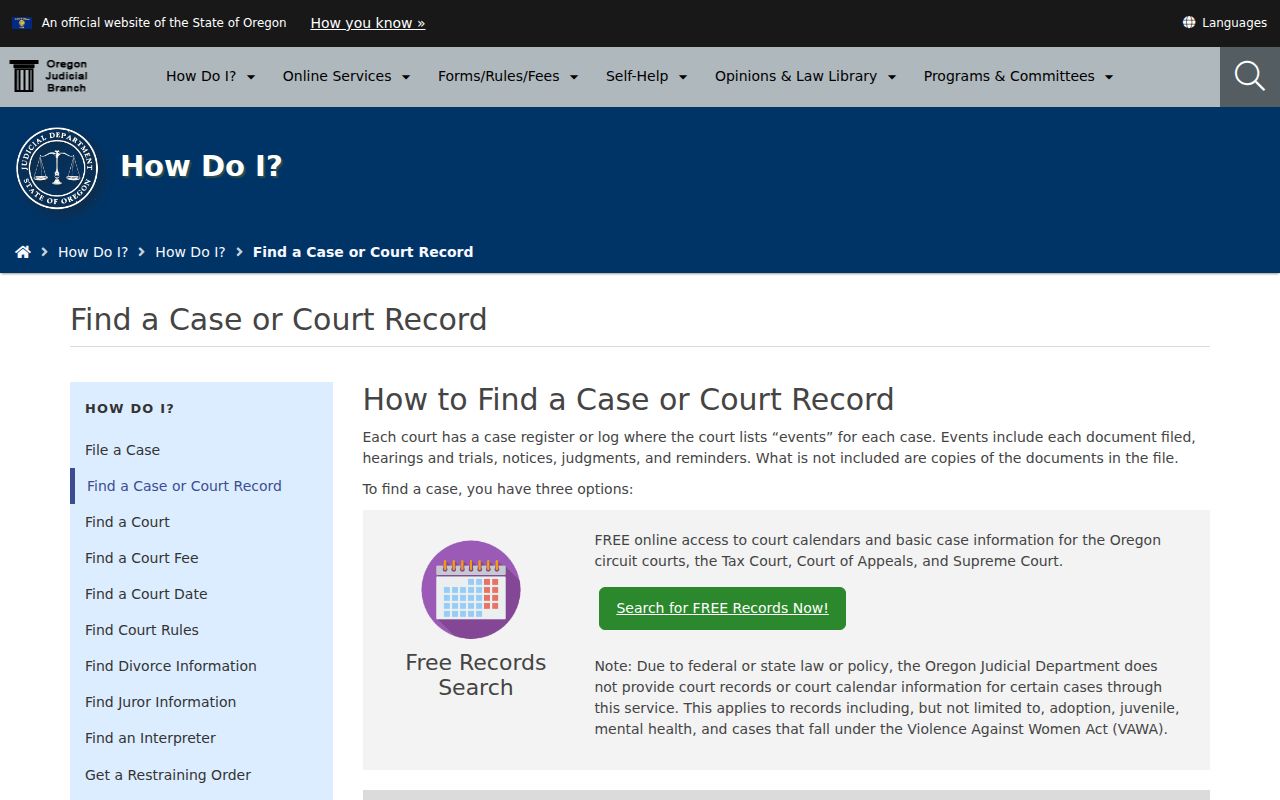
The court's online, terminal, and subscription choices have different depth and access limits.
Salem Credential Record Checks
When the question concerns a regulated credential or a registered business, use an agency-owned lookup. Oregon Medical Board verification handles name and credential-number searches. It also offers a specialty route built on a city or five-digit ZIP and a distance. A result can show credential number, status, dates, type, practice location, and Board-action links where applicable. That answers a licensing question, not a question about where someone lives.
Oregon's business registry accepts a business name or a registry number. Advanced search is available. Results can identify a registry number, entity type, registry date, registered agent, mailing address, and associated names. Filing contacts should stay filing contacts. They prove no storefront, no current local activity, and no person's residence.
| Official source | General commercial profile |
|---|---|
| States its agency purpose, current scope, and record field. | May combine sources with unknown freshness or matching logic. |
| Lets a researcher retain the agency URL, identifier, and retrieval date. | Should be treated as an unconfirmed lead until the official custodian verifies it. |
With either source, keep the underlying record type in view rather than stretching a credential or entity filing into a general identity conclusion.
Salem Deed Index Paths
Marion County's record map rewards anyone tracing a Salem address history. The Clerk lists recorded documents from 1974 forward. It also lists historic deeds from 1855 through 1976, marriage licenses from 1849 through 1977, Commissioner Court Journal volumes from 1851 through 1984, and Board archives from 2013 forward. The recorded and historic-deed paths overlap. Yet the county promises no shared interface, image, or index fields between them.
A legal description is what ties the Assessor account to the Clerk's document index. It may take the form of a subdivision lot and block, a metes-and-bounds description, or a section-township-range reference. It may also be a partition plat or an older book and page citation. A bare street address can miss that vocabulary entirely. The Clerk allows public in-office searching and viewing with no search charge. Its posted page lists copies at 25 cents per page. It also lists $3.75 search and certification charges. An image, of course, is not a certified copy.
The Digital Research Room opens with a disclaimer before document research.
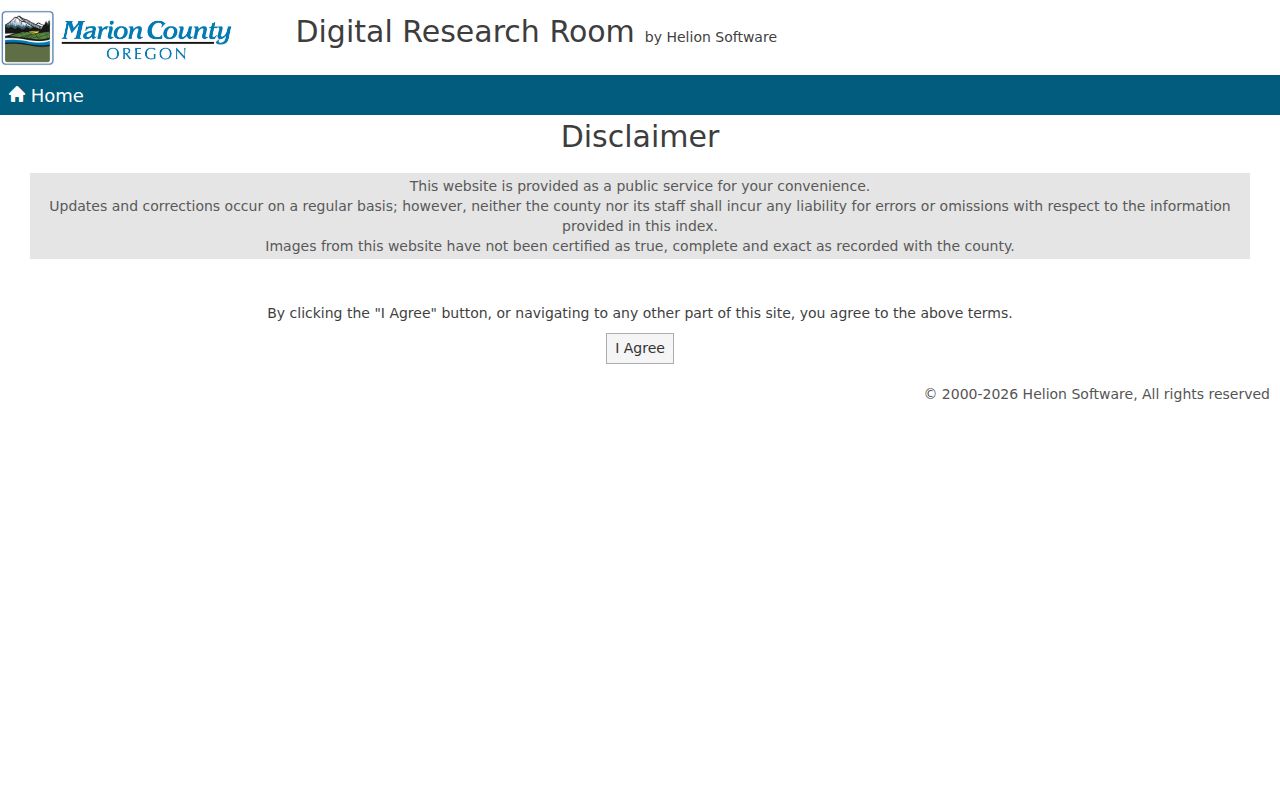
That acceptance screen is a useful reminder to separate an available record image from a certified record.
Historical Salem Resident Directories
Historical Salem residents directory work is bound to its era. The City's historic-property method starts with an addition name and a lot or block. It then follows ownership and maps. Salem Public Library offers routes to historical newspapers, maps, genealogy resources, and Sanborn maps. Access conditions can include a library card or in-library use. Willamette Heritage Center preserves a digitized 1871 Salem City Directory. It also holds an 1892 map, local organization rolls, and early newspaper material.
A directory listing shows only that someone appeared at an address in a given publication year. It is not proof of present identity. The City notes that address-to-person research gains a reverse index beginning in 1932. Earlier than that, a researcher needs a name and searches forward. The Salem City Directory section of the directory describes these historical collections in full.
Salem's 1932 Directory Pivot
Salem directory research turns on a single year. In 1932, the Salem residents directory added its reverse, street-by-street section. From that point forward, an old address works as a starting point. You can enter through the street listing, then check the entry against dated maps, deeds, and newspapers. Confirmation comes from matching those pieces together. Before 1932, though, the street section does not exist. You need a person's name first, drawn from a deed, map, or newspaper. The directory lookup then runs from name to address rather than the reverse. That asymmetry is why forcing a pre-1932 address into a modern search format fails.
- Parcel
- A county property unit used to connect an address, account, tax lot, and related records.
- Index
- A finding tool that points to records. It is not always the underlying image or certified copy.
- Criss-cross directory
- An address-oriented directory that can connect a published address to a dated listing.
- Legal description
- The recorded land description used to connect parcel research with deeds and other instruments.
Note: Keep the directory title, year, page, spelling, and abbreviation exactly as printed, since each detail can separate similarly named people in Salem records.
Salem Vital Record Timing
Vital records follow different access rules than the property rolls or the Salem residents directory. Oregon sets the window by record type. Birth certificates stay restricted for 100 years. Other vital records close for 50. A requester who qualifies must show the required relationship or authorization and identify themselves. The Oregon State Archives holds the older open material. The Oregon Health Authority controls anything still inside the restricted period.
At the start of 2026, the Archives opened 1925 birth certificates. It also opened 1975 death, marriage, and divorce records. That update runs on the calendar. It is not a promise that every Salem vital record is open. For an event inside the controlled window, follow the current OHA eligibility and permission steps instead of a plain name search. The OHA birth-certificate ordering path lays out the current certificate route and its eligibility context.
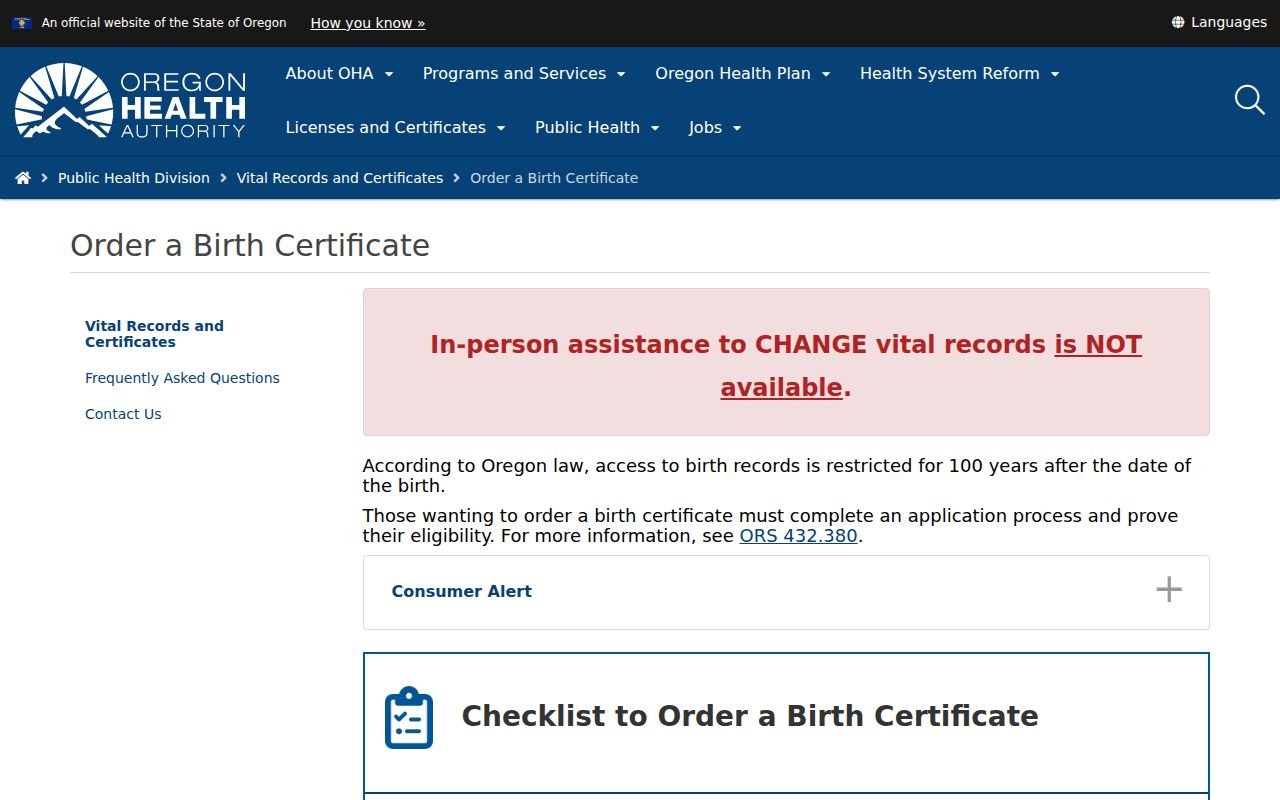
Use the agency's current instructions for record type, eligibility, identification, and ordering method.
Salem Privacy Record Boundaries
Open records in Oregon do not cancel privacy protections. The Address Confidentiality Program gives eligible participants a substitute mailing address plus mail forwarding. When a location is protected, leave it unavailable. Do not piece it together from property rolls or the residents directory. ORS 192.368 adds a safety-related non-disclosure path. It covers certain home addresses, phone numbers, and email information, within its stated limits. Court sealing, vital-record eligibility, and voter protections each operate on their own separate terms.
Lawful personal research only. Source records should be used for family history, civic questions, an estate matter, or another lawful purpose. Do not use any result to stalk, harass, or harm another person.
A focused public-record request under Oregon Revised Statutes Chapter 192 works best when it is specific. Name the agency and the record type. Give the date range, plus the address, case, or parcel identifier. State your preferred electronic format. Agencies generally acknowledge or respond within five business days. They then send a completion or progress response within ten business days after that. Even so, they may redact material. They may withhold a record or explain that it simply is unavailable.