
Salem Previous Residents Timeline
A backward address history needs an era-aware source plan. Start with the current parcel and move through the record route that covers the period in question. The Marion County document systems, Salem’s directory method, municipal permit history, library resources, and State Archives series all have different date boundaries. Previous residents are best treated as dated listings or documented parties, not as a single continuous list.
| Source | Documented years | Custodian or access point | Historical use |
|---|---|---|---|
| Recorded documents | 1974 to present | Marion County Clerk | Recorded instrument and legal-description trail |
| Historic deeds | 1855 to 1976 | Marion County Clerk historic deed route | Earlier deed research, distinct from the recorded-document system |
| Reverse directories | 1932 and later | Salem Public Library and local collections | Address-to-name historical listings |
| Historical newspapers and maps | Newspapers from 1869; map access varies | Salem Public Library resources | Dates, notices, address context, and cross-checks |
| Permit and planning records | July 1, 2005 forward | Salem Permit Application Center | Administrative activity at an address |
For the most recent part of the chain, begin with the parcel and recorded documents. For an older household question, use the City historic-property method, then select a directory or map by its date. The date ranges overlap in places, but an overlap does not make two sources interchangeable.
Salem Address and County Check
Before tracing previous residents, confirm that the address is in Salem and determine its county. Salem extends into both Marion and Polk counties, so the city name alone does not identify the right recorder or property office. The city-limits locator is the first location check, followed by the appropriate county parcel source.
For a Marion County address, use the Assessor account to retain the exact location address, account or tax-lot reference, ownership and mailing fields, and current legal-description lead. County web information refreshes every 24 hours. An owner or mailing field begins research but does not establish who lived at the address during any period.
Salem Deed Chain Backward
Use the current parcel to build a chain of title, then walk it backward one recorded transfer at a time. The Marion County Clerk recorded-document path covers 1974 to the present, while historic deeds cover 1855 to 1976. Their overlapping dates require care: identify the system used, the recording reference, the legal description, and the party role in each document before connecting it to the next link.
- Confirm the city and county, then retain the current Assessor account and exact address form.
- Copy the legal description, rather than treating the street address as the sole property identifier.
- Use the current owner or other recorded party and the legal description to locate the relevant Clerk document.
- Read the prior party role, document type, recording reference, and description before searching that party’s earlier acquisition.
- Repeat the comparison backward, switching to the historic deed route when its stated coverage is the relevant route.
The Clerk permits free public document searching in its office. The County posts a 25-cent-per-page copy charge and $3.75 posted charges for searching and certification. A record image is not certified, so obtain a certified copy directly from the Clerk when that status matters.
Salem Deed Chain Terms
Record vocabulary keeps an address history from drifting between similar-looking properties. The County explains that a legal description can use lot and block, metes and bounds, section-township-range, a partition plat, or a prior book and page reference. Keep this wording with each document, particularly if a later map or directory uses a different street label.
- Grantor
- The party transferring an interest in a recorded document.
- Grantee
- The party receiving that interest. The roles must be read from the document, not guessed from the names.
- Chain of title
- The documented sequence of property transfers connected through parties, references, and a matching legal description.
- Legal description
- The formal land description used in recorded property work. It is more stable than a street address for older records.
- Enumeration district
- A census geography used to organize collection. It can help narrow a historical household search, but it is not a parcel identifier.
Salem Directories by Publication Year
The City’s historic-property research guide starts house history with the addition name and lot or block, then directs researchers to maps and directories. Beginning in 1932, a reverse index supports address-to-name work. Before 1932, start with a person’s name and search forward through the available directories.
Use only confirmed years. The Willamette Heritage Center has a digitized 1871 Salem City Directory and cites examples from 1889, 1890, 1893, 1896, 1905, 1909/10, 1913, 1915, 1924, 1930, 1932, 1935, 1939, 1941, 1942, 1945, and 1962. Those citations do not establish a continuous run or a publisher for any year. Ask the collection or library about the desired volume.
Older directory entries often use compact notation. A listing can include a name, occupation or business context, a residence abbreviation, a boarding notation, or a spouse reference. Copy those marks as printed, including the page and publication title. The record becomes more useful when it is compared with a same-period map, legal description, or newspaper item, rather than silently expanded into a modern address or family claim.
Salem Directory Census Comparison
Directories and census material serve different roles in a previous residents search. A directory is a publication-year listing that may begin with an address after 1932. Census research can test whether a household appears in the relevant released census material, but it should follow the date and spelling established by the directory rather than substitute for it.
- Choose the available directory closest to the period in question and copy its full citation, spelling, abbreviations, and address form.
- Use that date range to identify the relevant released census material and any applicable enumeration district.
- Compare names, household composition where available, and the address or place context without forcing a match from a common surname.
- Return to the next available directory, map, or recorded document to test whether the address sequence continues.
For Salem-specific collection context, consult the historical city directory record path. Preserve conflicts instead of smoothing them out. A directory entry, a census reference, and a deed can each be accurate while describing different dates or people.
Salem Maps and Permit Dates
Maps and permits add physical and administrative context to an address timeline. Salem Public Library resources include historical newspapers, Sanborn maps, genealogy materials, and library-card access to scanned Salem newspapers dating back to 1869. Use a map or newspaper to corroborate a dated address form, then compare its label with the recorded legal description rather than treating a map boundary as title evidence.
The Salem Permit Application Center supplies another time marker. Its online records reach back to July 1, 2005 and can include work description, status, inspection information, and applicant or contractor details. A permit identifies an administrative event, not an occupant. Earlier City material may need a focused public-record request.
Salem Archives as Corroboration
The Oregon Historical Records Index can provide historical discovery leads for Marion County series, including census material, estates, guardianships, naturalizations, probates, divorces, and a women’s property register. An index hit identifies a record series or repository. It is not a complete biography or proof that a listed person occupied the address.
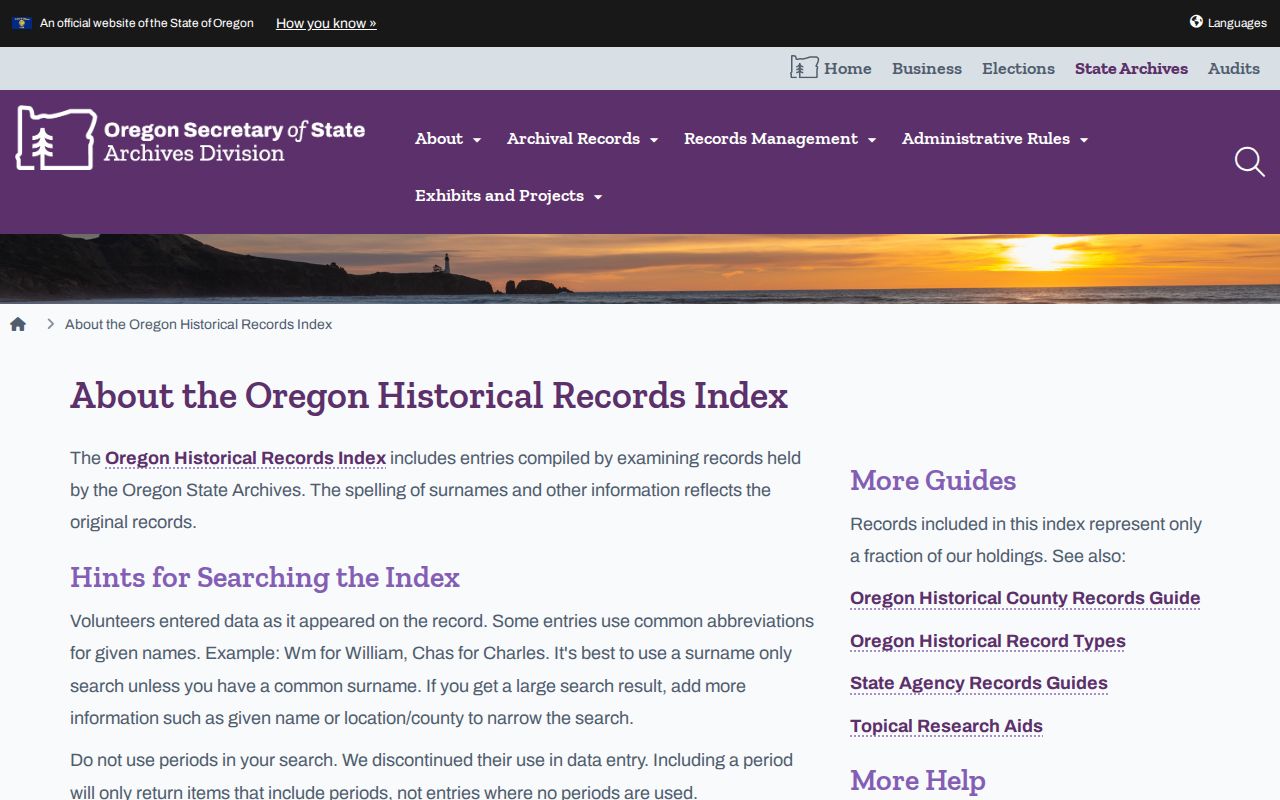
Use the index result to locate the cited series, retain its date and repository, then compare it with a deed, directory, map, or newspaper. The result becomes corroboration only when the dates and identifiers support the same historical question.
Salem Marion County Archives
The Oregon State Archives Marion County provisional guide describes county formation and historical series such as naturalization and probate material. It provides a repository route for extending an address history when deeds and directories point to a person, estate, court book, or case reference that needs a primary record check.
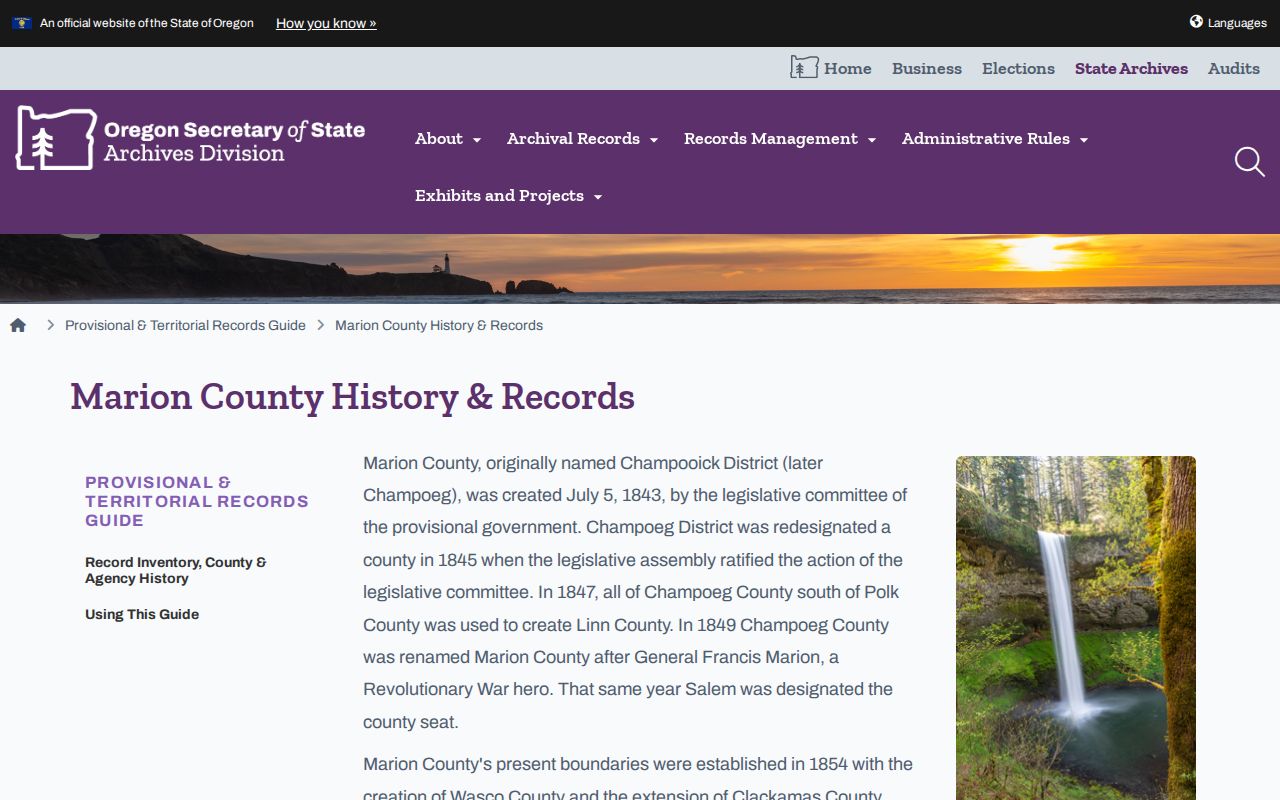
The guide supports series-level research, not an automatic household result. The State Archives is also a local research option in Salem at 800 Summer Street NE, with appointment-based hours published by the agency. Check the current archive notice before planning an in-person visit.
Salem Historical Evidence Conflicts
When records conflict, retain the source title, record type, date, access condition, spelling, and identifier rather than choosing the most convenient version. A dated directory listing may show a person at an address, a recorded instrument may show a property transaction, and a permit may show a City administrative event. None alone establishes a complete household history.
Street forms may also change. Salem documented the 2022 renaming of Salem Parkway to Dr. Martin Luther King Jr. Parkway. That supports checking both names for records tied to that roadway, while keeping the original form and date beside the current name. It does not establish a broad renumbering rule for other Salem streets.
In 2026, Oregon Archives opened 1925 birth certificates and 1975 death, marriage, and divorce material. Those openings are year-specific. Check the current Archives vital-record guide for the applicable access rule rather than assuming every vital record is open.
Salem Previous Residents Limits
Previous residents research is most reliable as house history, family history, or personal curiosity. Historic listings can be incomplete, addresses can change form, and protected or restricted records must remain unavailable. Treat a gap as a gap. Do not create a connection from a name match alone or use an old record to make a claim about a living person.
Lawful house-history use. Keep the work focused on dated records and the property’s history. Do not use names, addresses, or archive results to stalk, harass, track, intimidate, or harm anyone.