
Salem Resident Lookup Records
Official Salem sources do not form one universal person file. Each record answers a different question and carries its own access limit. The table separates a property connection, a court matter, a controlled vital certificate, a credential, and an entity filing. Begin with the source that matches the fact being checked. A result that does not answer that fact is a limit, not an invitation to make an inference from a similar name.
| Record | What It Confirms | Where | Access |
|---|---|---|---|
| Property account | Ownership, mailing, location, tax-lot, district, and assessment fields | Marion County Assessor, after county confirmation | Web data refreshes every 24 hours; it does not prove occupancy |
| Basic court result | A case reference and party-oriented name result | Oregon Judicial Department record guide | Online, courthouse-terminal, and paid-network lanes differ |
| Vital record | An official event record only when the requester qualifies | Oregon Health Authority or State Archives, by record year | Open-archive and certificate rules are different |
| Credential record | License status and related regulator details | Oregon Medical Board verification | Practice location is not a personal address |
| Entity filing | Business identity and filing contact information | Oregon Secretary of State business registry | Agent and mailing fields do not establish residence |
Start an address-led check by confirming whether the point lies in Salem and whether Marion or Polk County keeps the relevant local record. Use a dated directory or archive source for a historical name. Use a regulator for a credential question. The resident lookup stays reliable when the source, date, and purpose remain attached to each result.
Confirm Salem Lookup Jurisdiction
Salem crosses the Willamette River into Polk County, so a Salem mailing city does not decide which county holds the parcel, recording, or court trail. Put the address into the City’s city-limits locator before treating it as a Marion County address. Preserve directional suffixes and unit details. The County Assessor and GIS then supply parcel context for the county where the property sits, while USPS settles the mailing-code question.
That sequence matters when a shared name appears in more than one place. A property card may display ownership, mailing, and location fields, but those fields are not evidence that the owner currently lives there. Record the account reference and lookup date before comparing it with another source.
Verify a Salem Resident Lookup
To look up a resident responsibly, build a small evidence trail instead of trying to turn one result into a biography. The goal is to test whether separate records point to the same person at the same time and place. Names, date ranges, address suffixes, account identifiers, and record scope are more useful than a bare name match.
- Anchor the place. Use the City limits locator, then the appropriate county’s parcel route. For a Marion address, compare the Assessor’s ownership, mailing, and location fields without treating any one as occupancy proof.
- Keep the record vocabulary. Save the date, full street suffix, account or tax-lot reference when exposed, and legal-description terms. A recorded document may use a lot and block or another legal-description form instead of a modern address.
- Test a court name carefully. Search the OJD party route with spelling variants and compare the case location, file date, type, and status. A result list is not a final disposition or the full case file.
- Use the right custodian for proof. For a vital event or court document, request the specific record from the agency that holds it. Keep an unresolved conflict as a conflict rather than forcing a match.
Older Salem family research can add a dated directory listing or archive reference, but it remains a historical listing. The historical collections have their own methods on the Salem directory book route.
- Docket
- A court’s running case record, often identifying filings and events rather than supplying every document.
- Index vs. image
- An index points to a record through names, dates, or identifiers. An image is the scanned or viewable document itself, when access is allowed.
- Certified copy
- A copy issued and authenticated by the custodian for an official purpose. A search result or screen view is not the same thing.
Salem Court Name Results
The Oregon Judicial Department record guide separates basic online records and calendars, courthouse terminals, and the paid Oregon Judicial Case Information Network. Its basic-search guide identifies filters for case number, file date, case type, status, and location. Party-oriented results can show a name with a birth year while masking the month and day. Those details help distinguish names, but they do not replace the actual case record.
| Result element | Use in a Salem name check |
|---|---|
| Case number | Gives the court’s identifier for a request or later review. |
| File date and status | Places the result in time and indicates its listed case state. |
| Type and location | Helps separate different courts and kinds of cases. |
| Party name and masked birth year | Offers a limited comparison point without exposing a full date of birth. |
Adoption, juvenile, mental-health, and other protected matters are excluded from the public basic search. An absent hit can therefore reflect an access rule or jurisdiction boundary, not a conclusion about a person.
Salem Court Terminal Access
Marion County Circuit Court is at 100 High Street NE in Salem. Its records lobby provides six public terminals on weekdays, subject to the court’s stated midday closure. The court describes digital and physical records from 1987 forward, limited microfilm for 1910 through 1986, and limited audio beginning in 2001. That access ladder is useful when an online result needs a narrower official follow-up.
See the court’s records-request and terminal information before a visit or request.
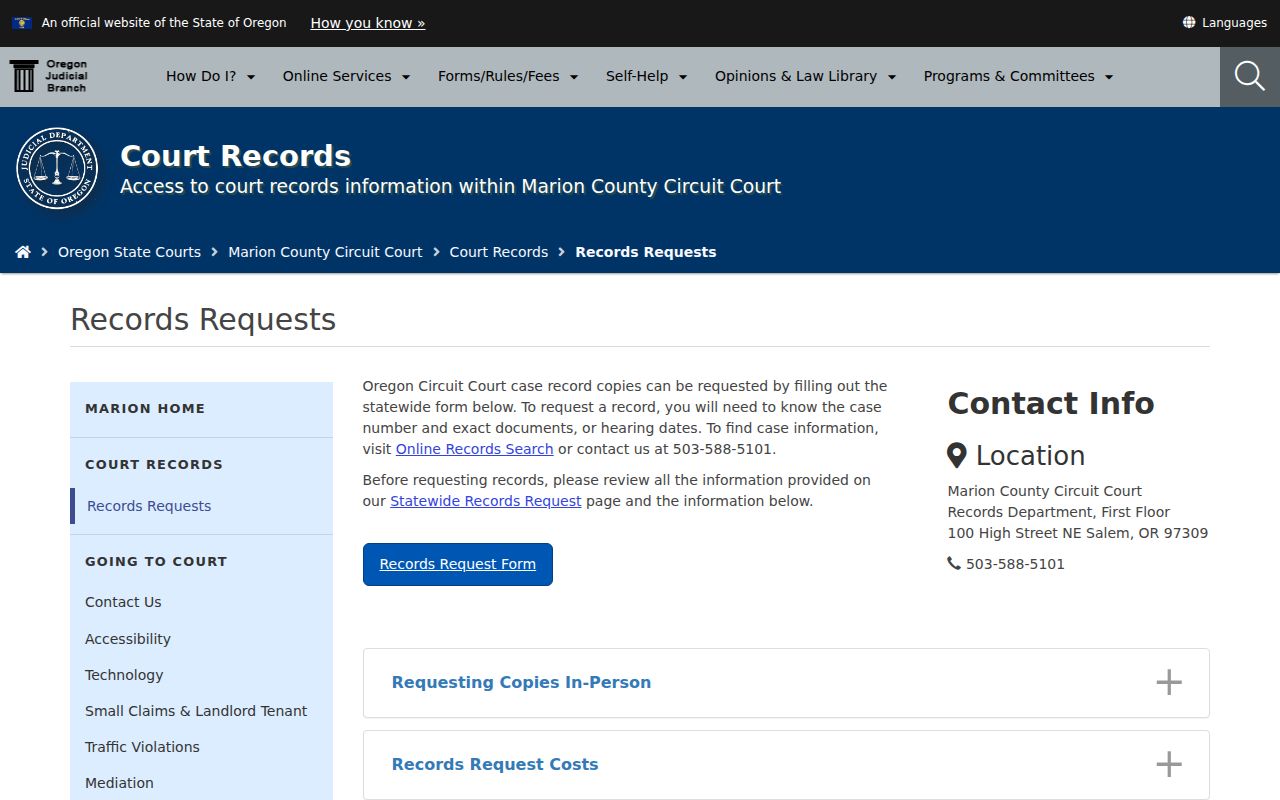
The local route adds access options but does not change exclusions for sealed or protected material. A useful request identifies a case number or party, an approximate date, and the particular document sought.
Salem Vital Record Access
Vital records are not a general name-search substitute. Oregon Health Authority eligibility rules keep birth certificates closed for 100 years and death, marriage, and divorce records closed for 50 years unless the requester meets the agency’s eligibility, identification, relationship, or authorization requirements. In 2026, the Oregon Archives lists 1925 births and 1975 death, marriage, and divorce records among the years open through its archival process.
Use the OHA eligibility rules to decide whether an OHA order or an archival record is the appropriate route.
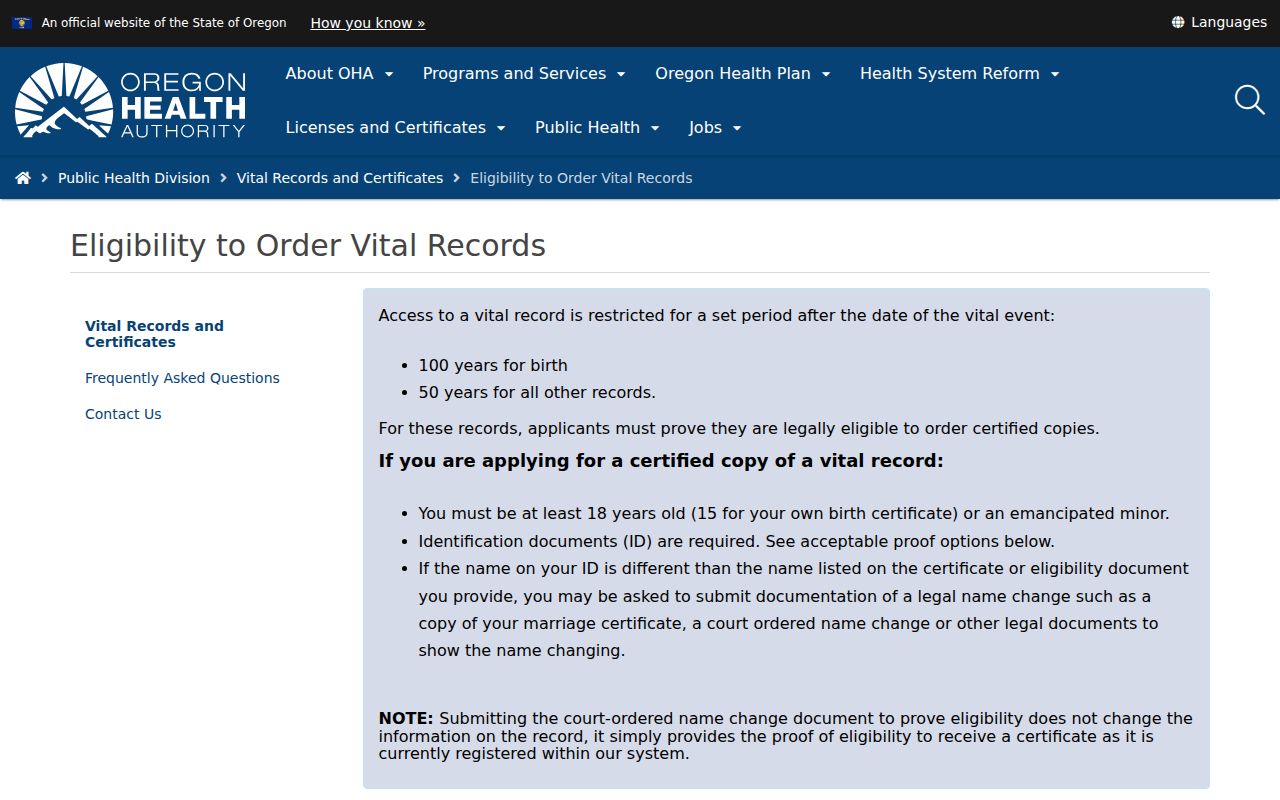
An old newspaper notice or directory can help establish an event date or place, but it does not become an official certificate. Request only the event record and date range the custodian needs to locate it.
Salem Credential Record Checks
When the question is whether someone holds a regulated credential, the Oregon Medical Board is the proper source. Its verification system supports a name route using last and first name, a credential-number route, and a specialty route with city or five-digit ZIP and distance. Detail may include a credential number, status, effective and expiration dates, credential type, practice location, and Board-action links where applicable. A practice location remains a professional contact, not proof of residence.
Use the Oregon Medical Board verification service for the credential question itself.
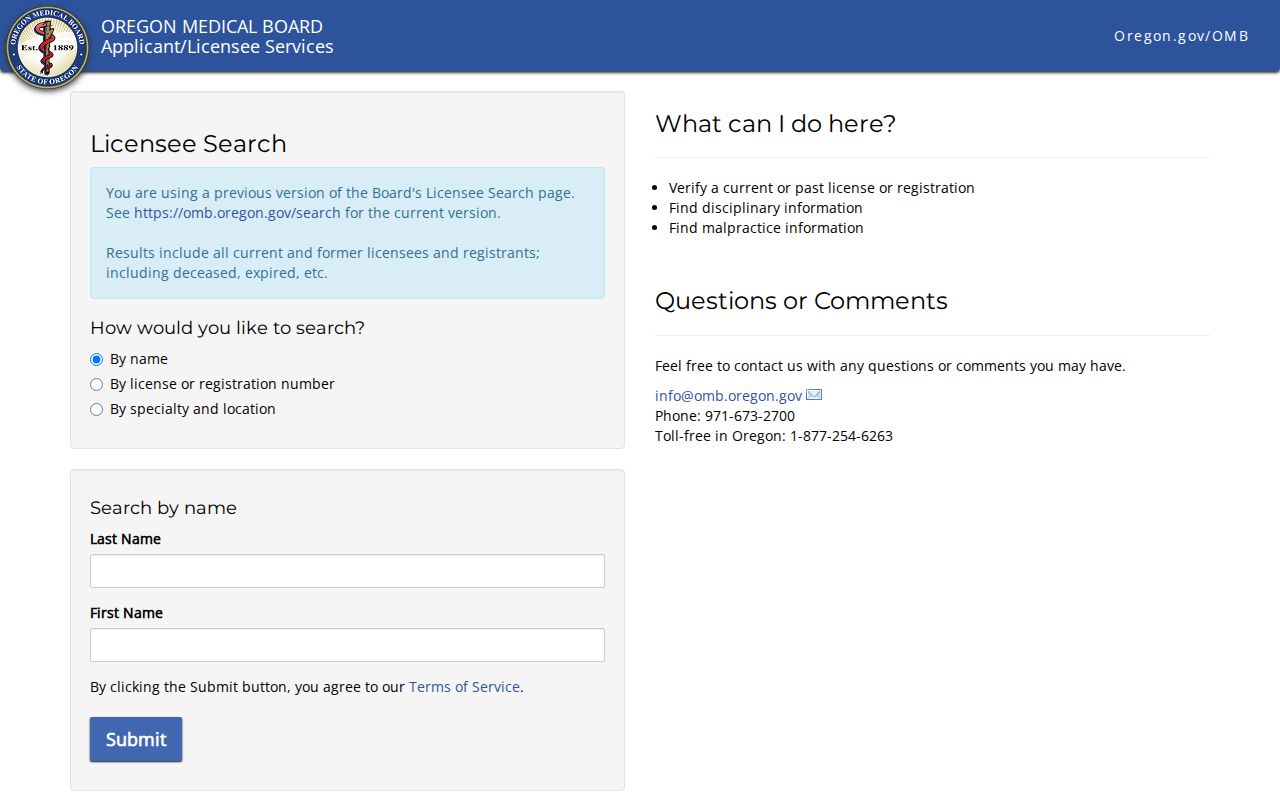
The result can confirm a regulator’s record and its dates. It should not be merged with property, court, or personal-address claims that the Board does not make.
The Oregon Secretary of State’s business registry is equally narrow. It searches by Business Name or Registry Number and can return a registry number, business name, entity type, registry date, registered-agent name and address, mailing address, associated names, and status. A filing contact is not a statement that an officer, agent, or associated name lives at that address.
Search the Oregon business registry when an entity, rather than a person, is the item being verified.
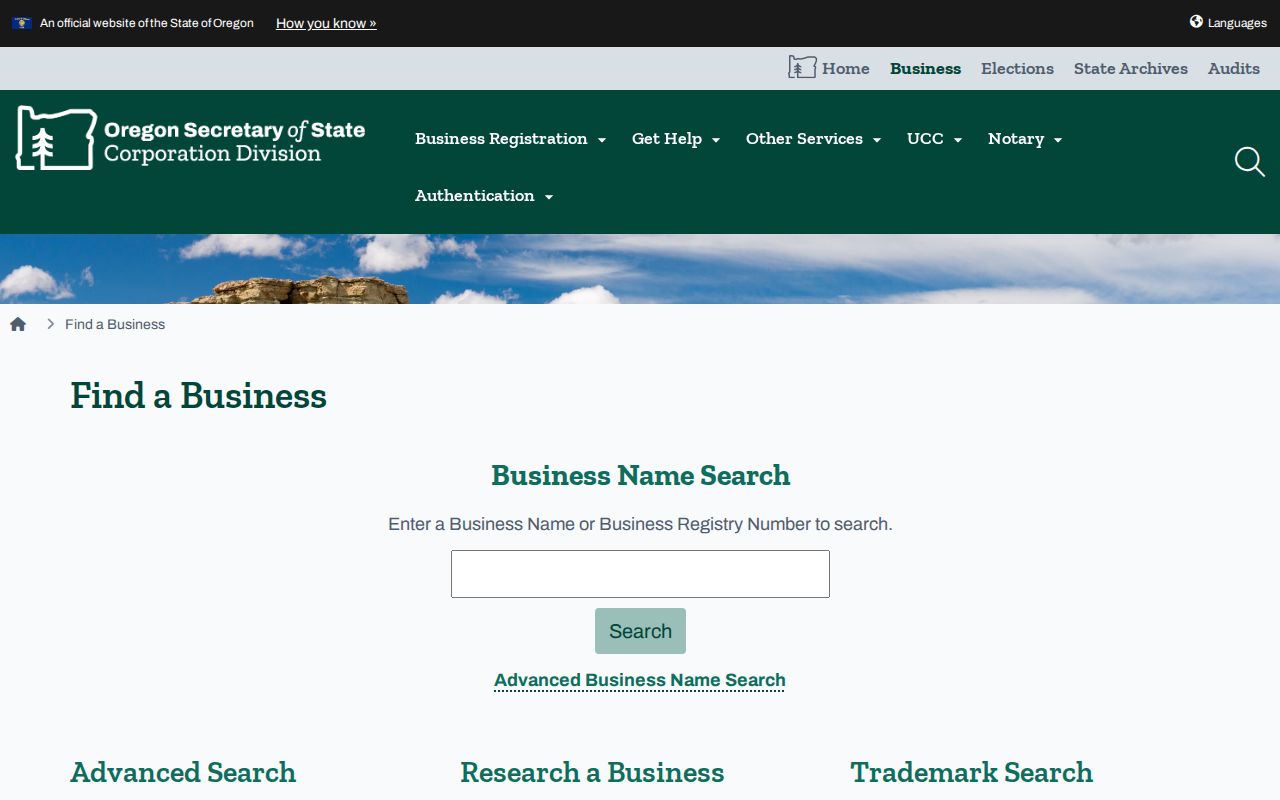
Retaining the registry number and filing date gives the result its proper context and keeps an entity filing separate from a personal record.
Oregon Privacy Rules for Salem Lookups
Oregon’s Address Confidentiality Program provides eligible participants a substitute mailing address and mail-forwarding service. Protected locations must remain unavailable and must not be reconstructed from other records. Voter data has its own boundaries under ORS 247.948: signatures, Social Security numbers, driver-license information, and birth month and day are protected. Ballot choice remains secret even where limited registration information is public.
The individual Oregon voter-search entry point displayed a CAPTCHA during research, so no unverified field inventory is claimed. A CAPTCHA is a verification control, not a gap to bypass. A public registration category also does not authorize a person to infer another voter’s ballot choice or protected address.
Narrow Salem Record Requests
When no public index answers the exact question, an Oregon public-records request should name the agency, record type, finite date range, known address, case number, or parcel identifier, and preferred electronic format. Under ORS Chapter 192, agencies generally acknowledge or respond within five business days and provide a completion or progress response within ten business days after acknowledgment. Redactions and actual costs can apply.
For court material, the Marion request form asks for requester contact information, delivery option, case or party, approximate filing date, case number if known, and requested document title or date. That model keeps the ask factual and bounded instead of asking staff to create a personal dossier.
Salem Resident Lookup Limits
Public records can be incomplete, dated, redacted, or tied to someone with the same name. Preserve the agency, source URL, retrieval date, record type, and exact identifier. A deed proves a recorded transaction, a directory shows a dated listing, and a docket tracks a case. None alone proves current identity or presence. Correct an error with the office that maintains the record rather than repeating an unverified conclusion.
Lawful use. Use a Salem resident lookup for personal, lawful research only. Never use record details to stalk, harass, intimidate, or harm another person.